
Welcome to the new blog post by Setup and Telemetry Specialist, Massimo Zecchinelli for this deep dive into the concept of Lateral Load Transfers and Anti-Roll Bars in SimRacing.
Afterwards, we'll conduct a telemetry analysis on these topics, providing valuable tips that will enhance your simulator experience, especially regarding the correct setup of anti-roll bars.
Let’s jump right in!
Lateral Load Transfer
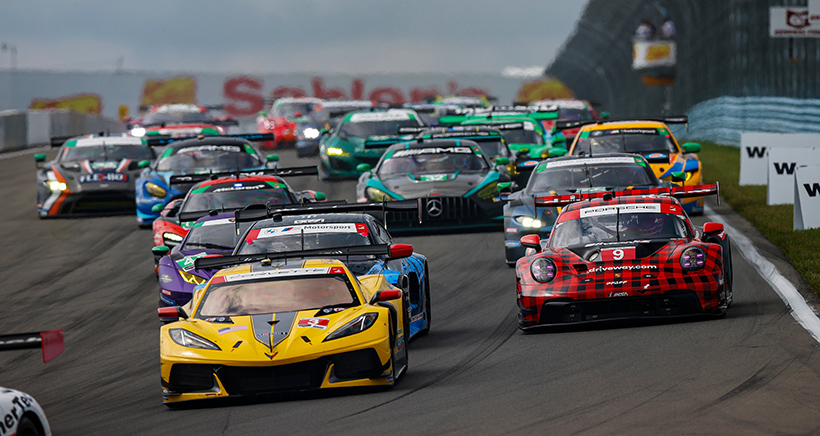
When a race car, regardless of its category, enters a corner, load transfer comes into play.
First, there’s longitudinal transfer during straight-line braking, then lateral transfer as the car enters the corner, distributing weight between the axles.
Mastering the distribution of load between the front and rear axles is a fine balance involving every component of the car, creating a delicate dance.
The car leans, adapts to the road surface, and prepares to challenge centrifugal force, aiming to take the corner as fast and efficiently as possible.
Every setup parameter we tweak aims to optimize load transfer, making the car as balanced as possible, or at least tailored to our driving style.

Body Roll and Introduction to Anti-Roll Bars
When discussing lateral load transfer, it’s essential to talk about anti-roll bars.
As the name suggests, anti-roll bars control and manage the roll of the car.
But what exactly is roll?
Roll refers to the oscillation of a vehicle around its longitudinal axis.
This occurs when, during a turn, the outer side of the vehicle tends to lower towards the ground, while the inner side tends to rise.
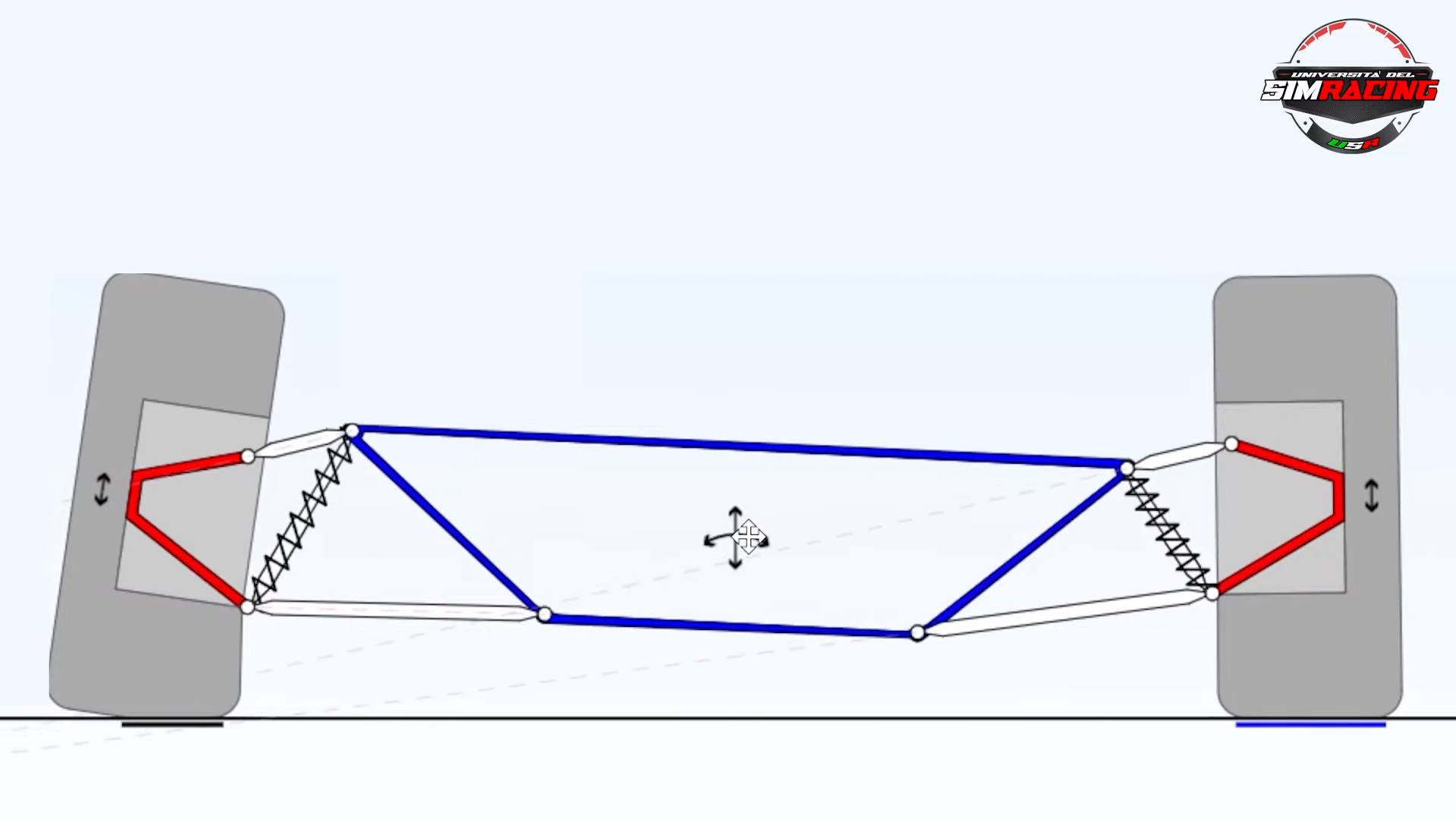
As the vehicle corners, centripetal force, generated by the friction between the tire and the road, pulls the car along its trajectory towards the center of the turn.
Conversely, due to centrifugal force, the load shifts to the opposite side of the turn, causing body roll.
Anti-Roll Bars
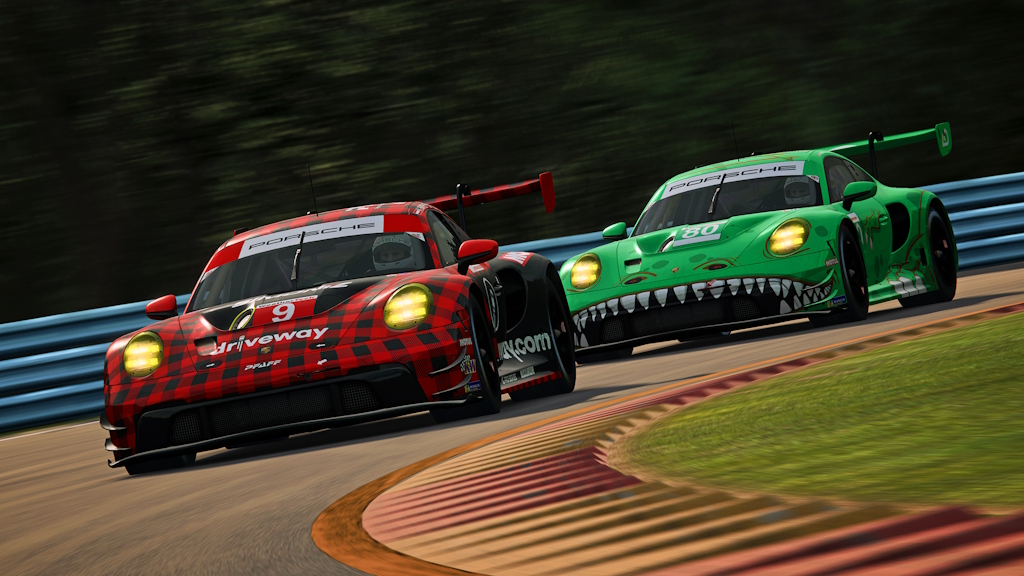
Anti-roll bars are used to limit this oscillation of the chassis.
They connect the suspensions on the same axle, helping keep the vehicle flatter during cornering.
It’s important not to fall into the trap of believing that more roll means more load transfer.
Load transfer isn’t a result of roll; it’s the opposite.
In fact, less roll doesn’t necessarily mean there’s less load transfer from the inner to the outer tire.

As we’ll see, the amount of lateral load transfer is independent of the amount of body roll.
Another common misconception is that stiffer anti-roll bars reduce lateral load transfer.
This is entirely false.
The anti-roll bar opposes vehicle roll by taking load from the inner tire and transferring it to the outer tire.
In essence, lateral load transfer is the amount of vertical load variation on the tires due to lateral acceleration.
In other words, it’s the amount of vertical load increased on the outer tires and reduced on the inner ones when the car is cornering.
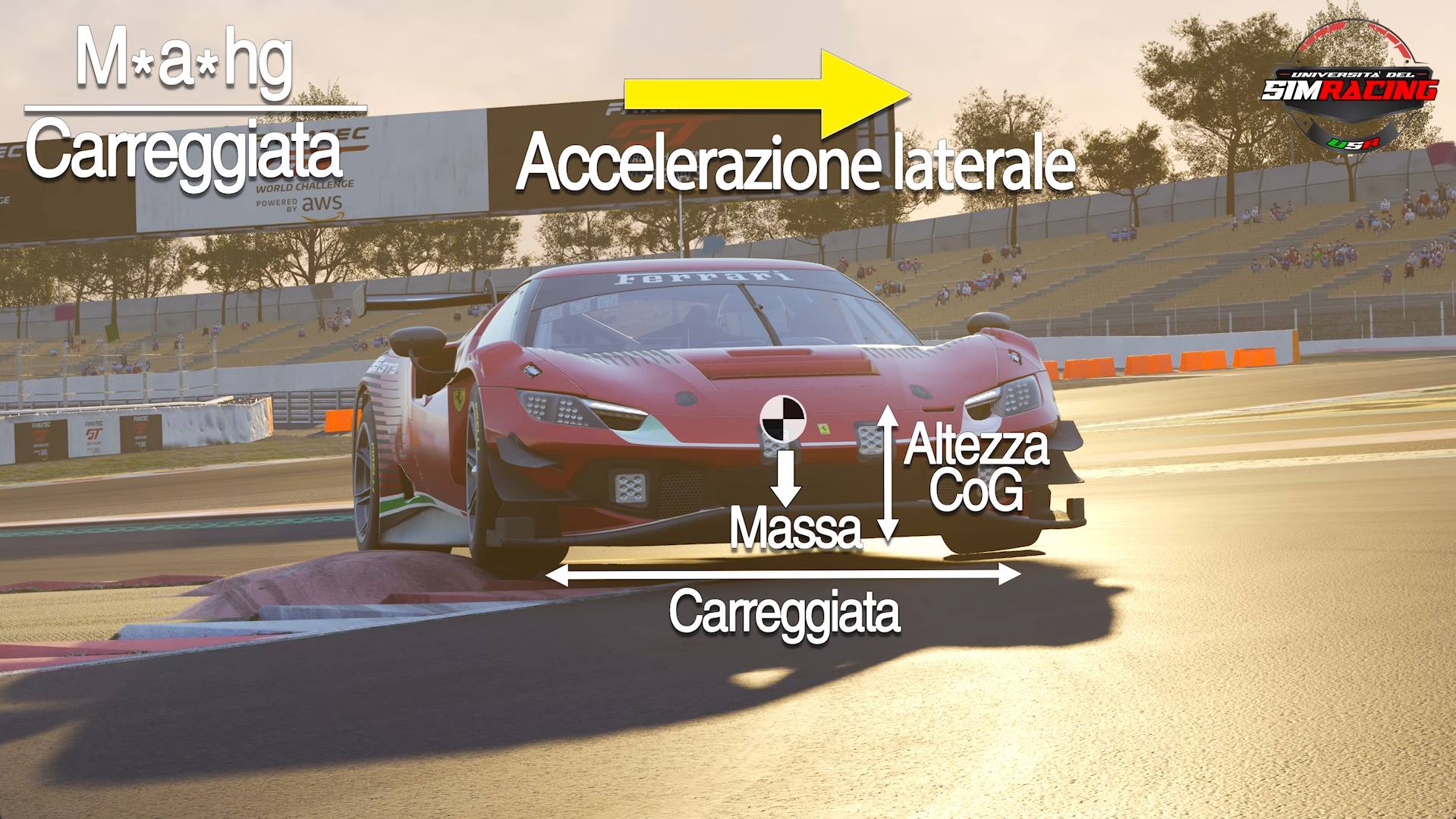
The Formula for Lateral Load Transfer
The formula for lateral load transfer considers only:
- Mass;
- Lateral acceleration (the speed at which we take the corner);
- Center of gravity height;
- Track width, without considering springs, anti-roll bars, or dampers.
Most of these variables aren’t adjustable via setup:
- The mass is more or less fixed;
- Lateral acceleration varies by corner but should always be maximized;
- Track width is determined by design or technical regulations.

The Formula for Total Load Transfer
It's important to note that, although springs and anti-roll bars both work in the same phase of a turn, the middle part, they affect the car differently.
The spring contributes more to the overall stiffness of the car, thus changing the balance much more than an anti-roll bar would.
If the balance needs a significant shift, springs are typically used.
Whether only a minor adjustment is needed, anti-roll bars are better.
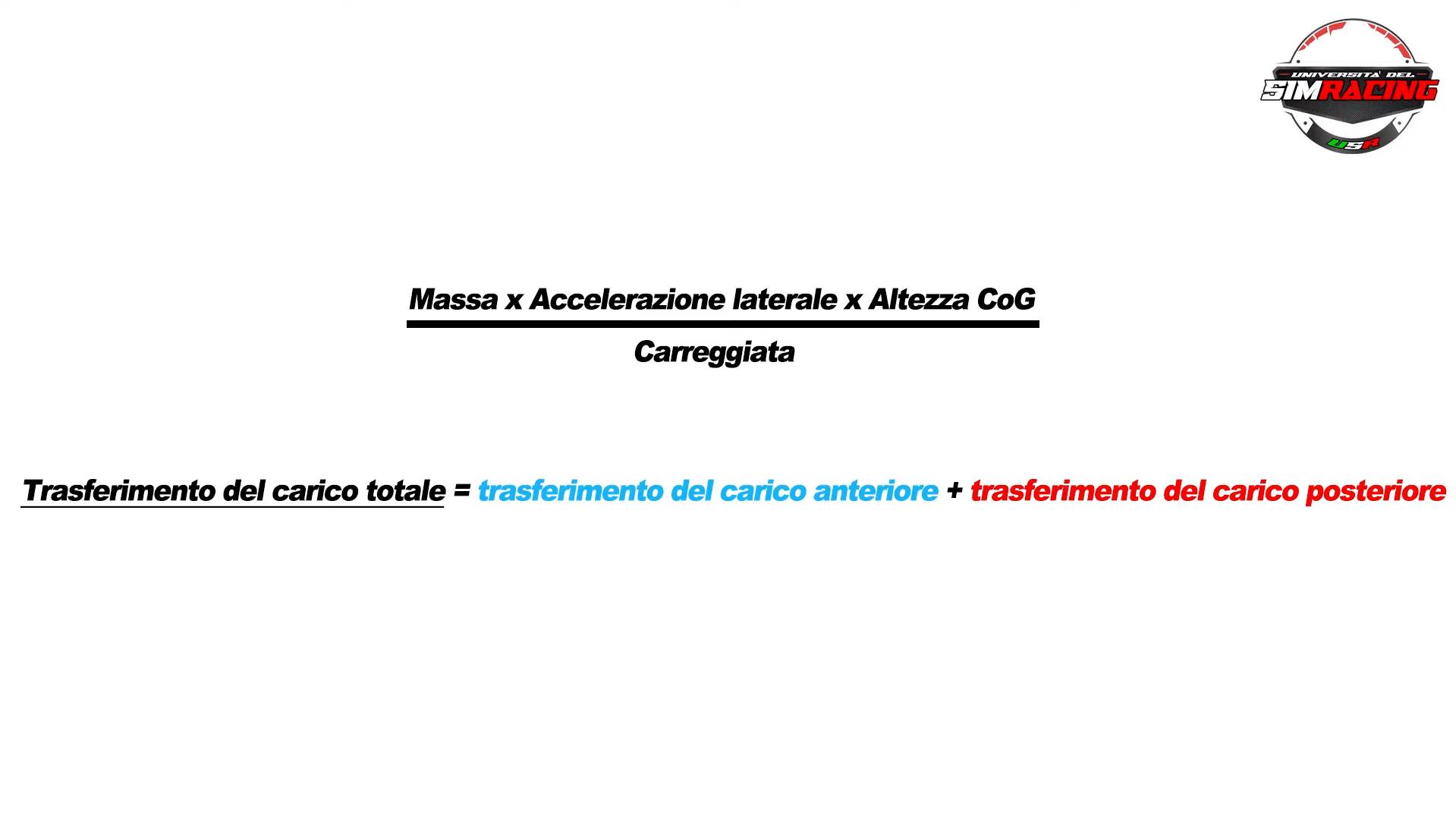
The answer to the above lies in total load transfer.
As you can see, it’s the sum of the front and rear load transfers.
It's evident that there is a distribution of movement between the front and rear.
This distribution is influenced by springs and anti-roll bars.
Increasing the stiffness of one axle increases the load transfer on that axle, reducing the load shift on the opposite axle, as the total load transfer remains unchanged.
This is what’s commonly referred to as "Lateral Stiffness Distribution."
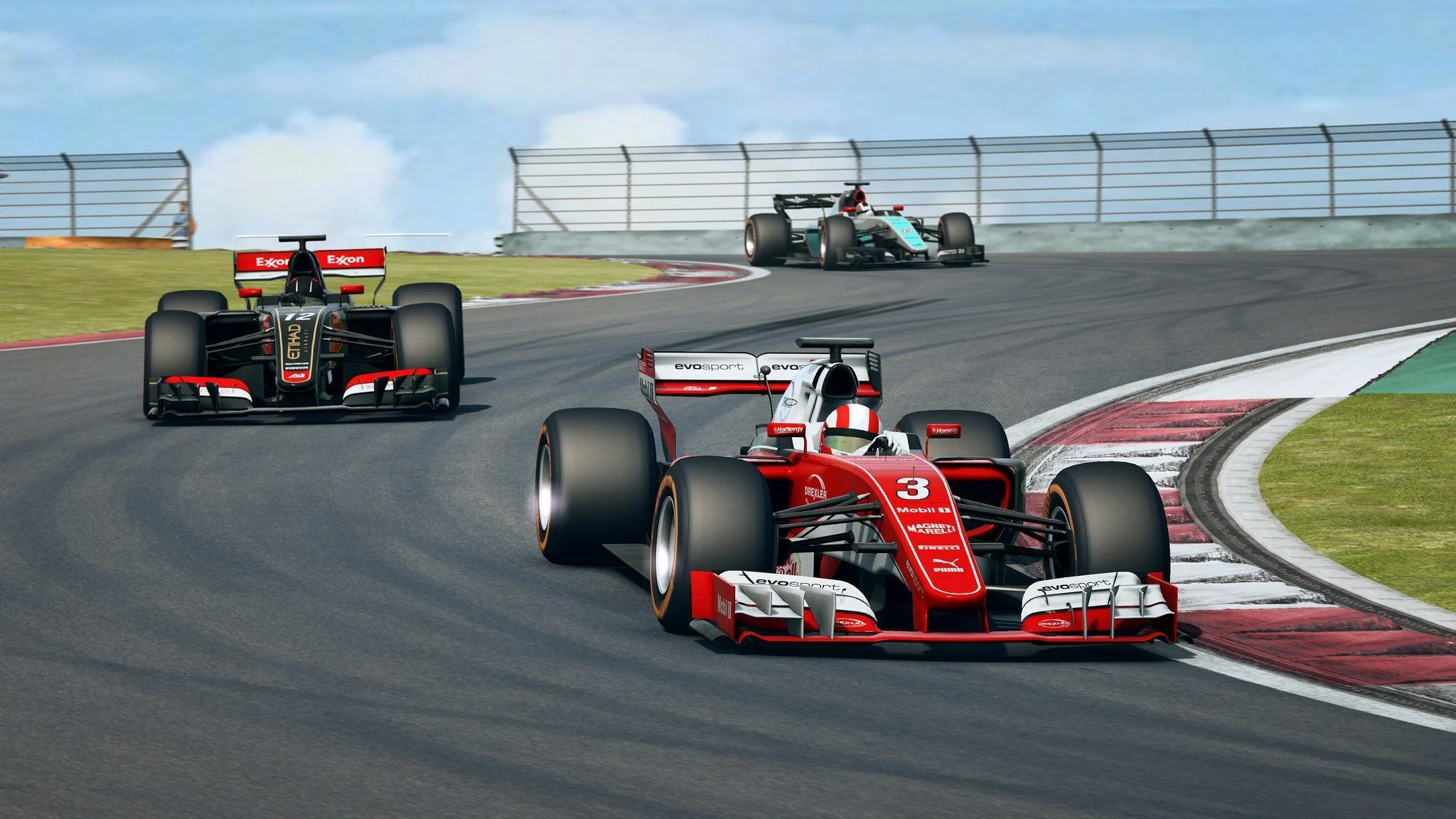
What Happens with a Stiffer or Softer Anti-Roll Bar?
A stiffer rear anti-roll bar shifts stiffness and load to the front.
In other words, it increases load transfer on the rear axle, reducing it at the rear.
However, the total remains unchanged.
A car with stiffer bars will be more responsive to driver inputs because of greater load transfer but will be more unpredictable.
Conversely, a car with softer bars will be slower to respond due to less transfer but will be more predictable.
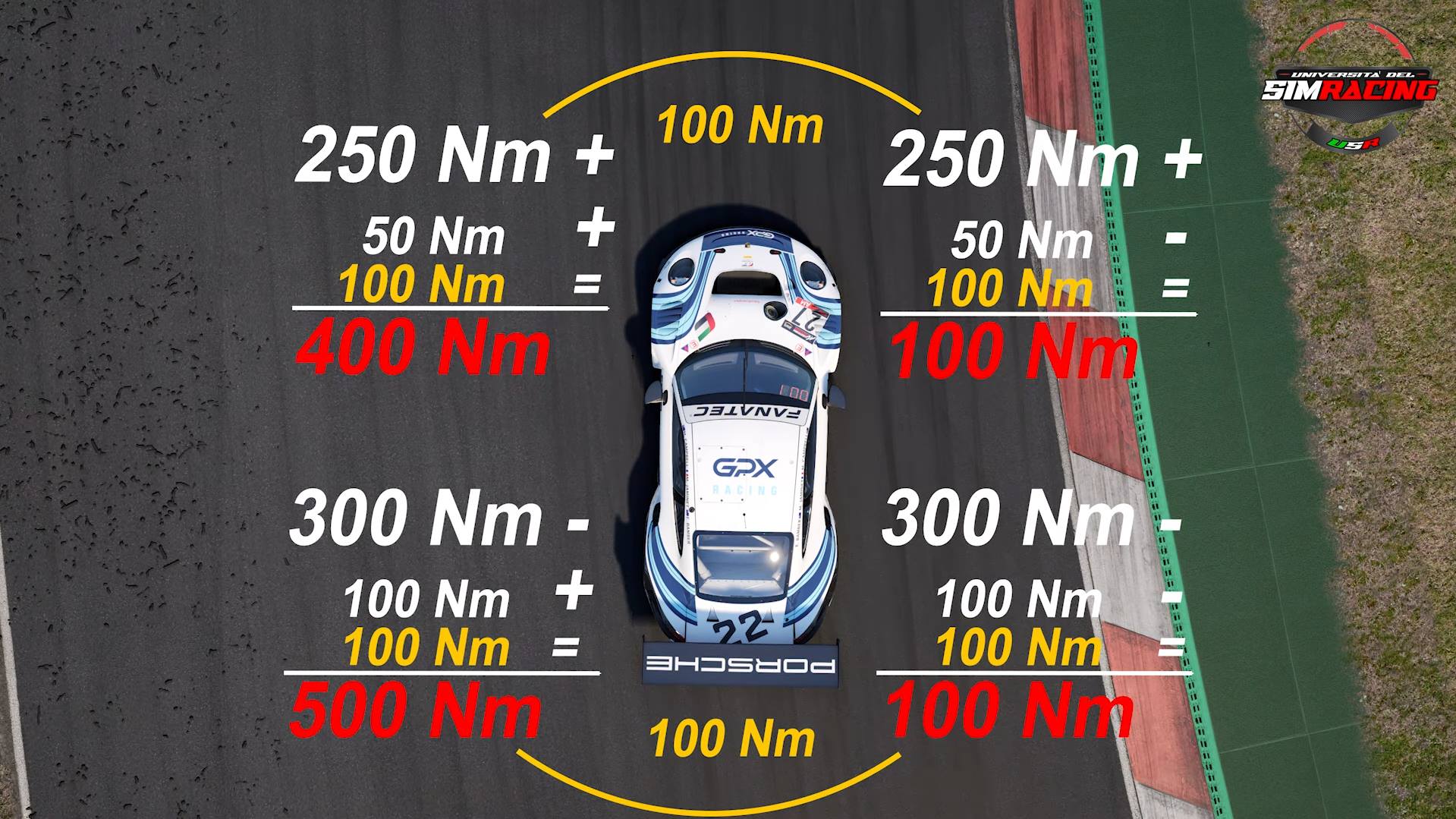
Practical Example of Load Distribution
Imagine our car, on a straight, has a load distribution of 250 NM on the front and 300 NM on the rear.
When taking a right turn, a natural lateral load transfer occurs due to weight distribution.
Given that, in the example, the Porsche has a rear-mounted engine, the rear axle transfers more load since it’s heavier, thus creating a load of 100 NM versus the 50 NM of the front axle, increasing the load gap between front and rear, making the car more oversteer-prone.
Now, suppose we install two anti-roll bars valued at 100 NM each, on both the front and rear axles.
The left front tire gains 100 NM of load, while the right front loses 100; the left rear tire gains another 100 NM, and the right rear loses another 100.
Now, the left rear tire has the highest load among all tires and will exceed its maximum grip level first, causing oversteer as a rear tire loses grip.
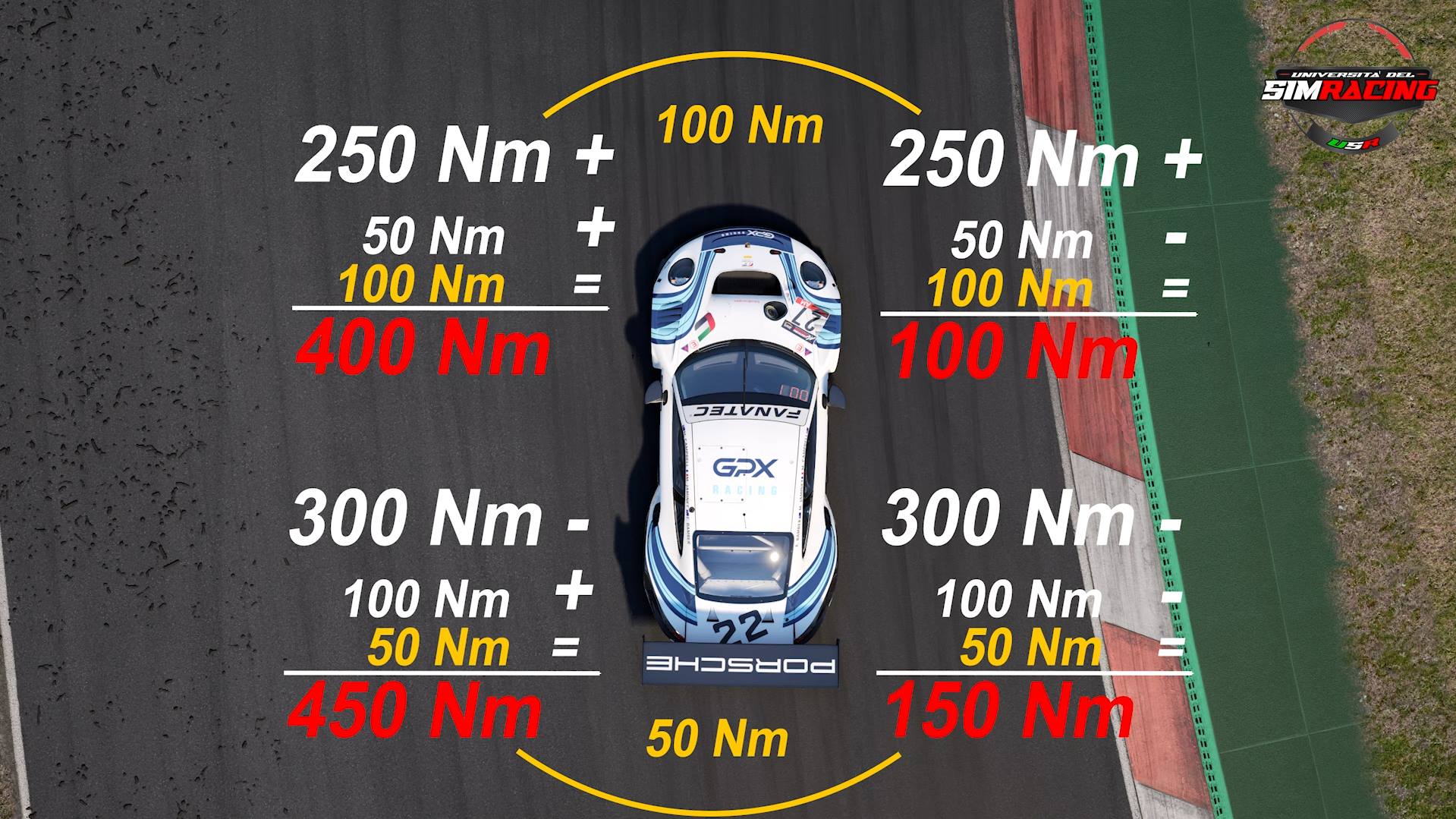
If we prefer a more understeering or neutral car, we can balance the car so that the front and rear tires exceed their grip limits simultaneously.
By setting our rear anti-roll bar to 50 NM and keeping the front at 100 NM, the external tires will have much more similar load values, meaning they will reach their grip limit almost simultaneously, ensuring a more neutral car behavior.
It’s crucial to remember that while both springs and anti-roll bars work in the same phase of the turn, the middle part, they influence the car differently.
The spring contributes more to the overall stiffness of the car, thus changing the balance much more than an anti-roll bar would.
Whether the balance needs a significant shift, springs are typically used.
If only a minor adjustment is needed, anti-roll bars are better.
Graphic Demonstration of Suspension Components Intervention
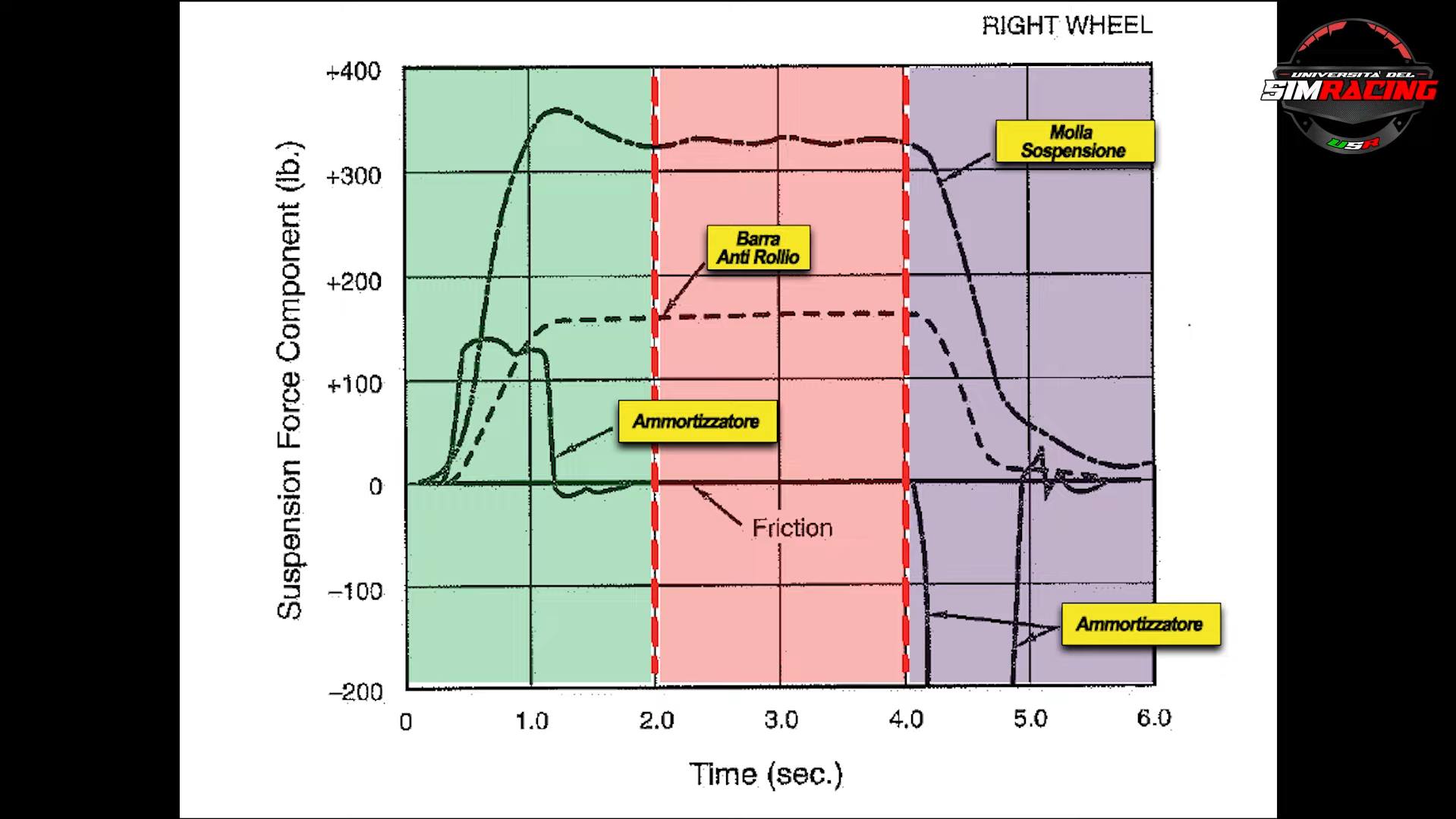
Analyzing a real graph, we can appreciate the different degrees of intervention of various suspension components in a left turn.
In the first part of the graph, colored green, we see that the first suspension component to apply force is the damper, followed by the springs and the anti-roll bar, but much more slowly.
Anti-roll bar produces about half the force of the spring, partly depending on the stiffness of the bars.
Then, in the central part of the graph, colored pink, the damper completely exhausts its function and returns to zero, as dampers apply force only when there’s an action by the spring.
Then, the middle of the corner, the car is in a stationary phase, so the dampers don’t move, leaving the spring and anti-roll bar to apply force.
In the last part of the graph, colored purple, the car is exiting the corner, and the damper is again the quickest to apply force, but in the opposite direction.
Telemetry Analysis on the Illustrated Concepts
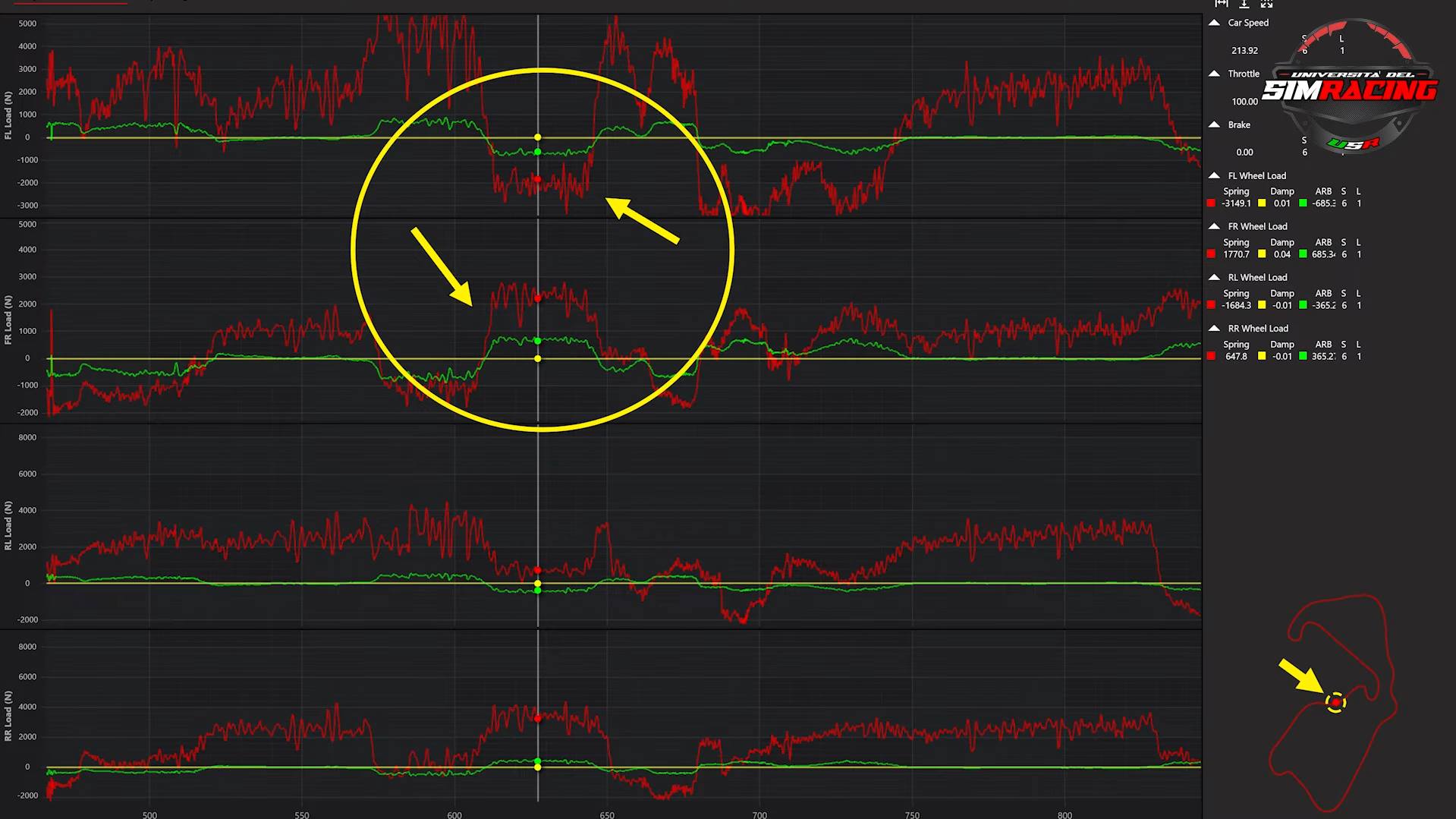
Analyzing the telemetry of Assetto Corsa Competizione, we can observe the same behavior, with the anti-roll bar playing a significantly smaller role than the spring force.
When it comes to setup, there’s no single right or wrong approach, as nuances abound, especially considering the car being driven.
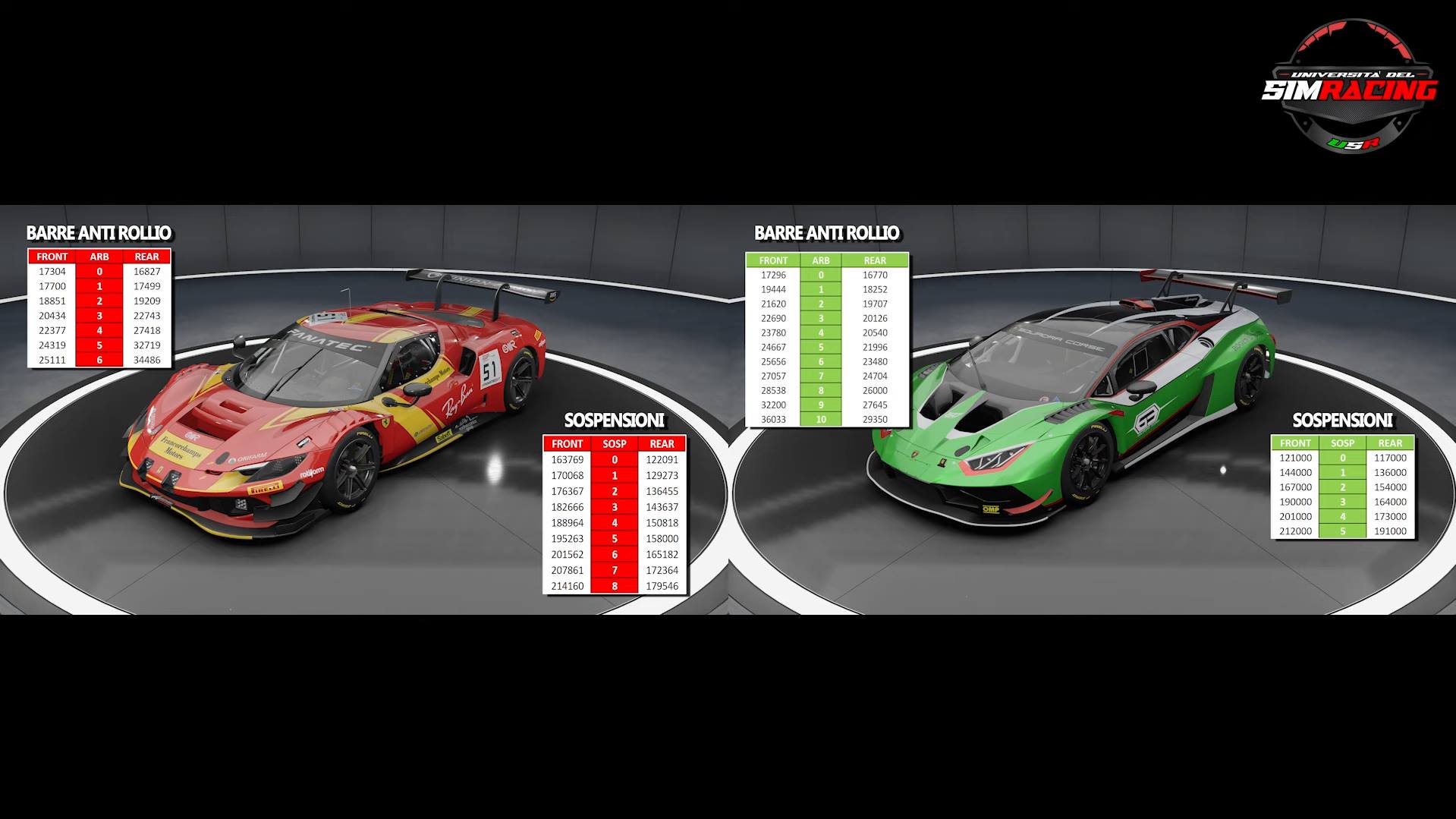
Let’s now look at a practical example, focusing on suspension differences in anti-roll bars between the Ferrari 296 GT3 and the Lamborghini Huracan GT3 Evo2.
The spring and bar values are numerically different and differ greatly in absolute terms.
For instance, Lamborghini's bars are much stiffer at the front than the rear.
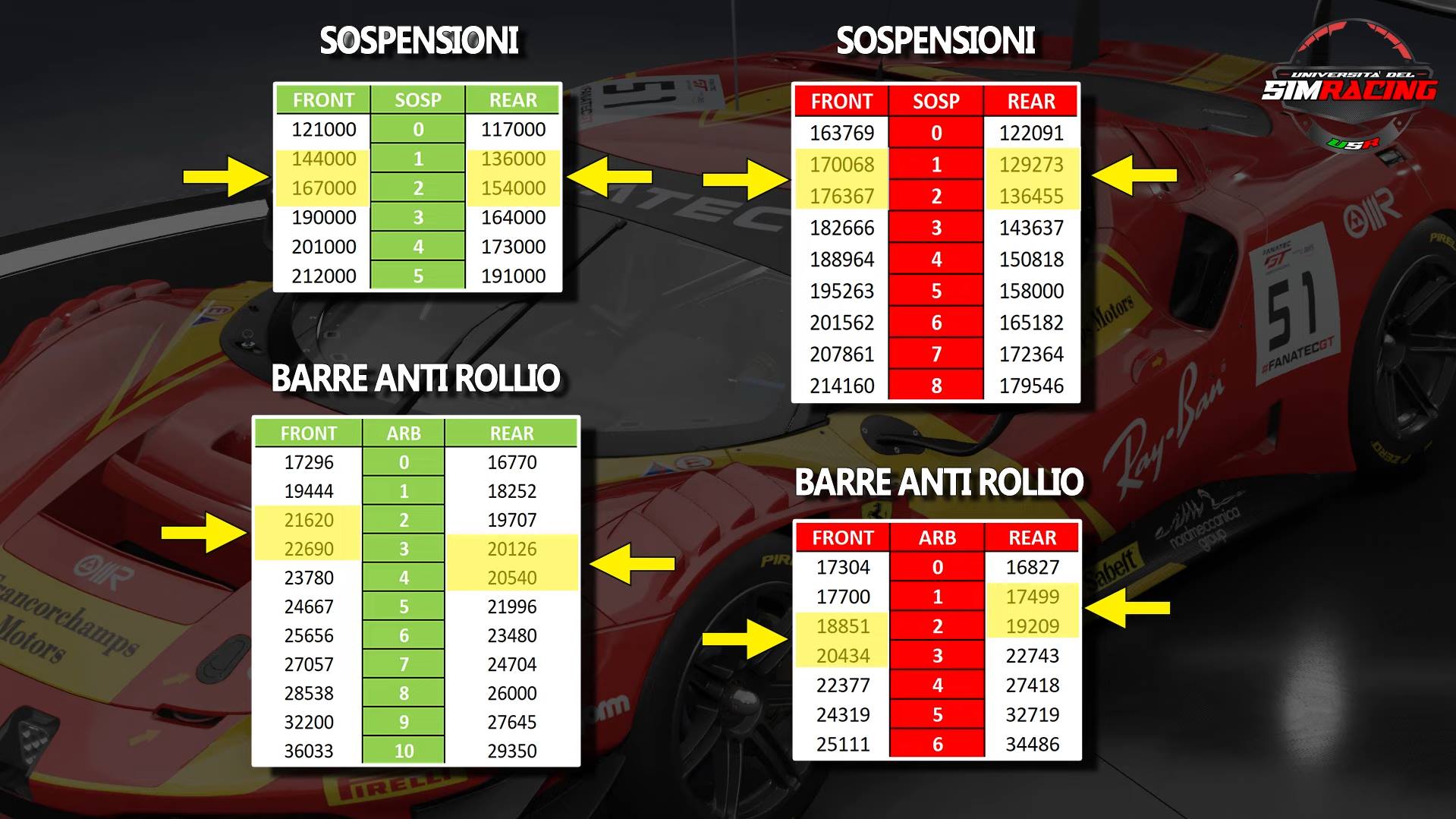
What matters is understanding the difference between one click and another for springs and bars.
For bars, the difference between one click and another is quite similar for both cars, but the same can’t be said for suspension springs.
While for Ferrari, the difference between one click and another is about 6000 NM, for Lamborghini, it’s over 20,000.
This means that an extra click of suspension stiffness is very different between the two cars, and in the Ferrari..
...it will shift the car's balance slightly, while in the Lamborghini, this setup change will be much more impactful, a crucial aspect to always keep in mind.
It should be noted that the only stiffness added by anti-roll bars relates to cornering roll, while the suspension spring affects both longitudinally, in straight-line acceleration and braking, and laterally with roll.
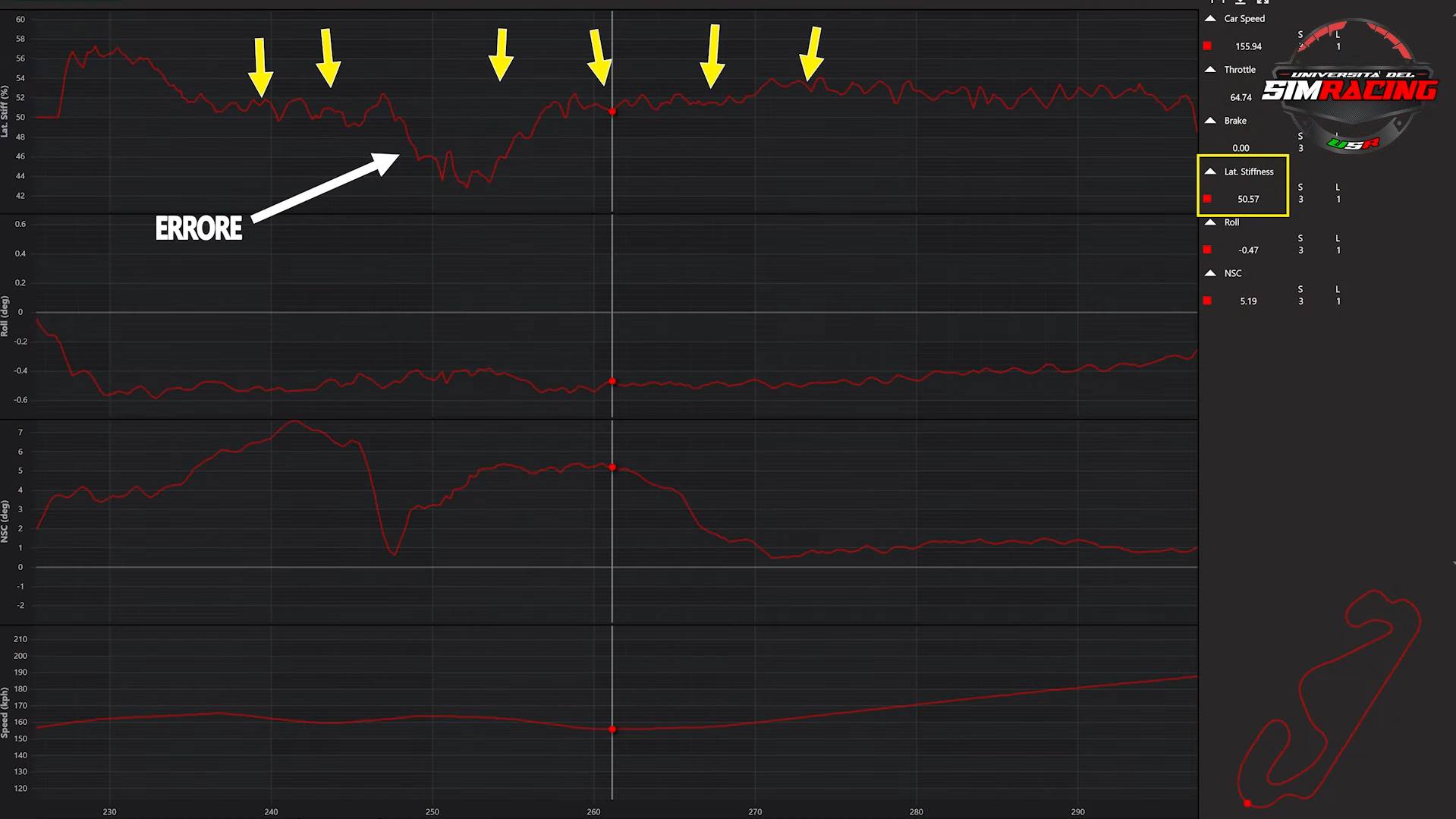
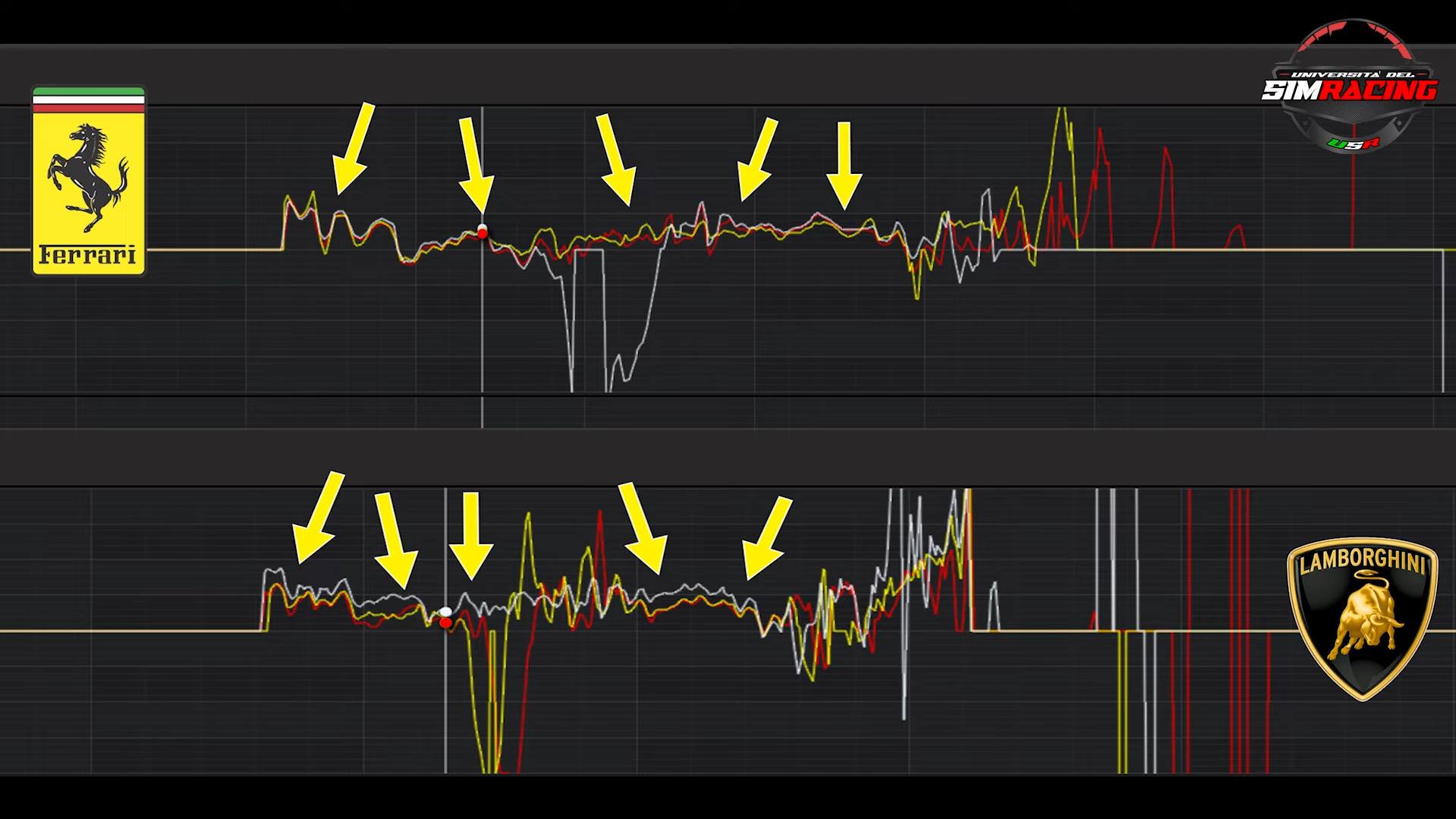
With telemetry, let’s look at some examples on the Barcelona track using these two cars, focusing on the lateral load distribution graph.
With the Ferrari, in turn 3, excluding the two errors, the values between a front anti-roll bar set to one or two are almost identical, as the values change very little between clicks.
Even stiffening the front suspension by one point, the white line on the graph, doesn’t change much, for the same reason as above.
The same applies to turn 4, where lateral load distribution doesn’t vary significantly regardless of adding a click to the front bar or suspension.
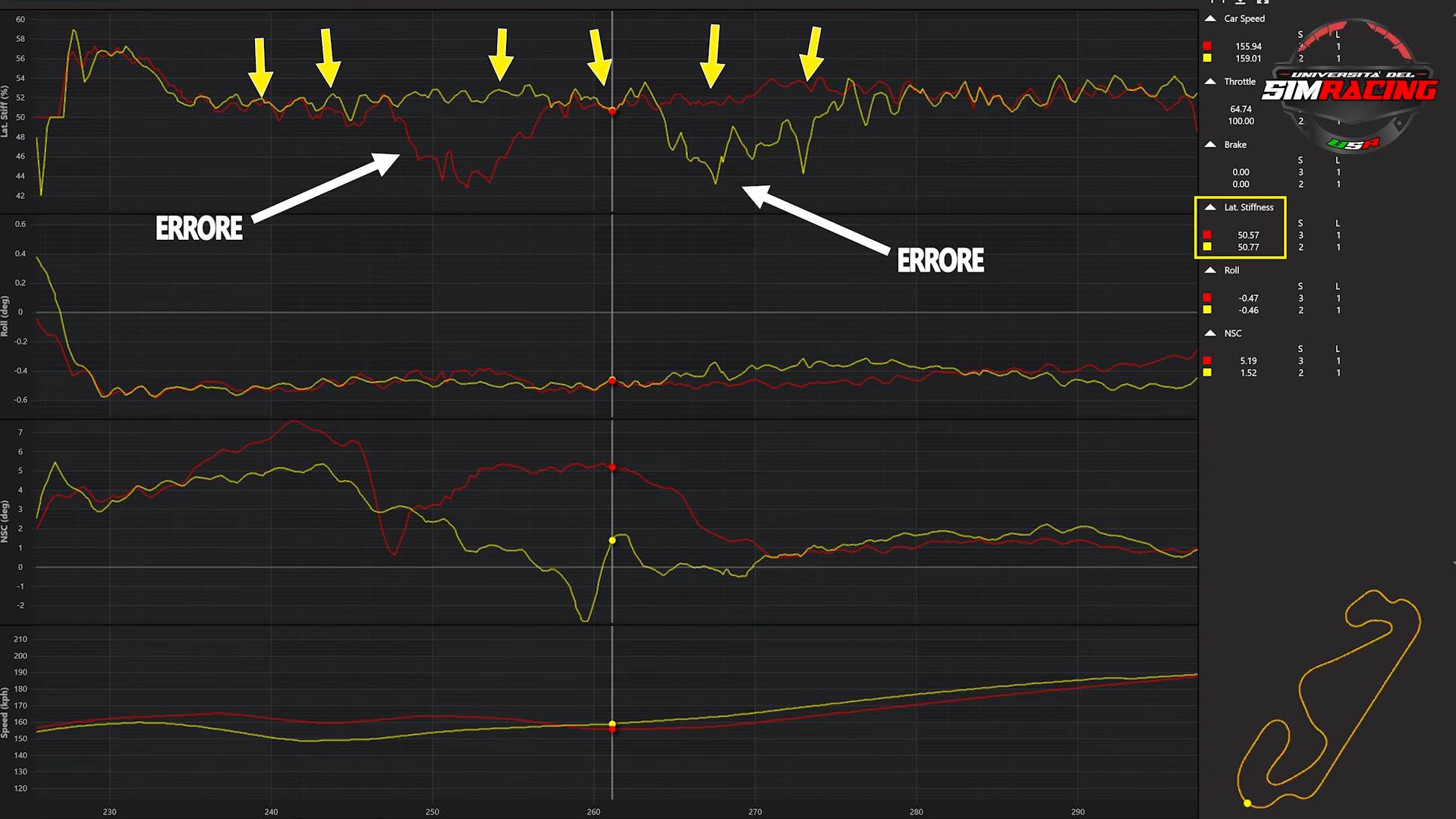
A different story for the Lamborghini in turn 3: a front bar set to 3 or 4 gives very similar values, as here too the stiffness values are close between clicks.
But when we increase the suspension value by one click, it’s clear how the load distribution is much more influenced by the collected data.
The passage to turn 4 confirms the same trend.
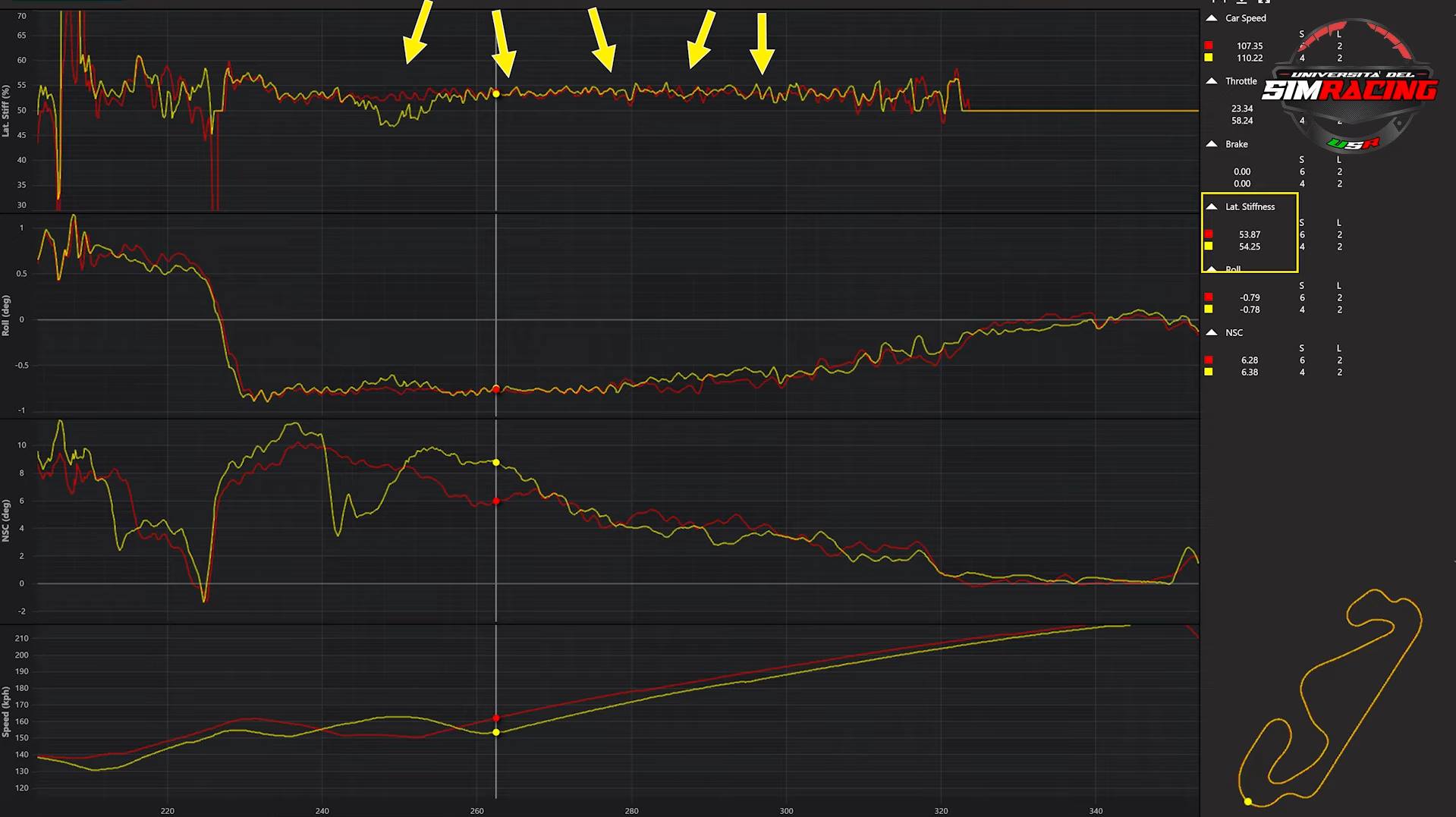
Comparing directly in turn 9, the fast uphill right-hand turn, the result is even more evident: the white line represents the load distribution with an extra click of front suspension.
Given the significant difference in suspension stiffness values between clicks for the Lamborghini, changing this parameter will significantly affect the car's behavior compared to making the same modification on the Ferrari.
And this is why, when adjusting suspension bar values, it’s always important to remember that anti-roll bars work only in corners, while suspensions affect the car’s behavior both in corners and during transitions, i.e., acceleration and braking.
Therefore, if you’re looking to adjust the car's balance or behavior at mid-corner, it’s best to start with anti-roll bars, as they are a fine-tuning tool and shift the balance more delicately than a suspension would.

Alright, that’s it for this deep dive!
Continue reading our blog posts by clicking the button below:
See you soon!